
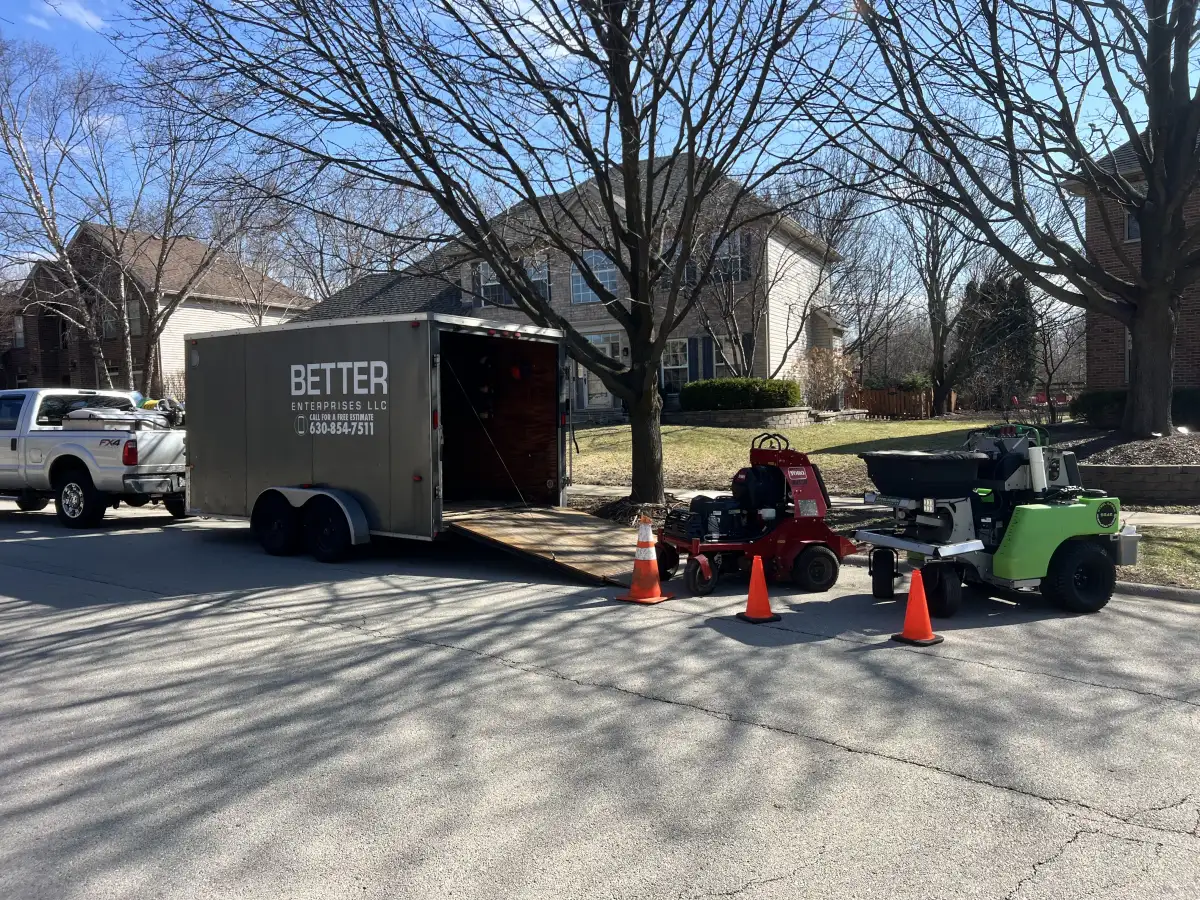
Aurora homeowners usually look for turf management after the lawn has already shown a pattern. Crabgrass keeps returning near the driveway. Dandelions come back after spot spraying. Thin sunny areas look green in spring, then fade in July. Water runs off hard soil instead of soaking in. Those problems are common across Aurora and the Fox Valley, and they rarely improve for long with a single product visit.
Better Turf & Snow serves Aurora, IL and nearby communities where cool-season grass has to handle clay soil, freeze-thaw compaction, humid summer disease pressure, spring weed growth, pavement heat, pet traffic, and a narrow fall repair window. Before you book a lawn program, the right questions can help you separate a real turf plan from a quick treatment schedule.
Five Field Signs of Compacted Lawn Soil
A strong turf management estimate should start with the lawn in front of the contractor. Ask whether the company reviews turf density, weed pressure, hard soil, drainage, shade, slope, pet paths, mower patterns, and heat-stressed edges before recommending a program tier. Two Aurora lawns can have the same square footage and need very different work.
A thick lawn with early broadleaf weeds may need a steady fertilization and weed control plan. A thin lawn that feels hard underfoot may need core aeration and fall seeding before fertilizer can deliver the result you expect. A lawn with open soil along sidewalks or drives may need better density before crabgrass pressure starts to drop.
How Do You Time Crabgrass Prevention in Aurora?
Crabgrass prevention is one of the most important timing questions. The best prevention happens before germination, when soil temperatures reach the spring window that triggers crabgrass growth. If that application happens too late, the barrier is weaker and the lawn can spend the summer fighting visible weeds.
Ask how spring applications are timed for local conditions instead of a fixed national calendar. Aurora weather can shift quickly from cold nights to warm afternoons, and that can compress the prevention window. A turf management program should connect crabgrass treatment with spring feeding, broadleaf weed control, mowing height, and long-term turf density.
What Is the Plan After Weeds Are Controlled?
Killing weeds is only part of the work. Dandelion, clover, plantain, and creeping charlie often spread where turf is thin, stressed, or cut too short. Weed control can clean up what is visible, but the lawn still needs healthier turf to hold those openings over time.
Ask how the program builds density after weeds are reduced. The answer may include balanced fertilizer, watering guidance, mowing-height changes, fall repair, or a soil review. Better Turf & Snow treats weed control as part of the full turf program because thick grass is the best long-term defense against recurring weed pressure.
Why Fox Valley Clay Compacts So Easily
Many Aurora lawns have compacted soil that limits root growth and makes watering inconsistent. Clay soil can stay wet after a storm, then turn hard during dry stretches. Older lawns can develop compaction from years of mowing and foot traffic. Newer lawns can struggle when sod was installed over disturbed construction soil with shallow rooting.
Ask whether the estimate includes a soil-health conversation. Not every lawn needs a separate soil health treatment, but compacted or depleted soil often needs more than fertilizer. If roots cannot use water and nutrients effectively, surface treatments have limited impact. A better plan considers the root zone before promising a quick result.
When Core Aeration—and Overseeding—Makes Sense
Core aeration and overseeding are common recommendations, but they should be tied to lawn condition. Aeration relieves compaction by pulling small soil cores from the yard. Overseeding adds desirable grass seed where the turf is thin, which helps close gaps before weeds move in.
Ask what the provider sees that supports either service. If the lawn feels hard, dries unevenly, has shallow roots, or shows thin areas where weeds keep returning, fall aeration and overseeding may be worth planning. If the lawn already has good density, a maintenance program may be the better first step.
How Will the Program Change From Spring to Fall?
Aurora lawns do not need the same treatment in April, July, and October. Spring is about crabgrass prevention, early feeding, and broadleaf weed control. Summer is about heat stress, drought patterns, possible grub activity, disease pressure, and watering habits. Fall is the strongest window for repair, root-building fertilizer, aeration, overseeding, and preparing cool-season turf for winter.
Ask what changes during the season and why. The answer should connect each visit to a real lawn-care reason. If every stop sounds identical, the program may not be accounting for how Illinois grass grows. Better Turf & Snow builds turf programs around the Fox Valley growing season so each application supports the next one.
What Will I Know After Each Visit?
Clear service notes help you understand what was done and what the lawn needs next. Ask whether you receive details about the application, watering recommendations, re-entry guidance for family and pets, and observations about weeds, thinning, compaction, heat stress, disease pressure, or possible insect activity.
Those notes also help homeowners support the program between visits. Mowing too short, watering too lightly, letting leaves mat down in fall, or sending heavy traffic across stressed turf can slow progress. Good communication turns lawn care into a coordinated plan instead of a set of disconnected applications.
What Results Are Realistic This Season?
A good turf program can improve color, reduce weeds, and create cleaner growth, but first-season results depend on the starting point. A lawn with moderate weeds and decent density may show progress quickly. A thin, compacted, or drought-stressed lawn may need several applications plus fall repair before the biggest improvement appears.
Ask what should change in the first 30 to 60 days, what may take the full growing season, and what conditions could slow the result. A professional answer should be specific and realistic. Turf management is not an instant makeover. It is a coordinated plan that helps the lawn become thicker, cleaner, and more resilient with consistent timing.
Is the Company Familiar With Nearby Fox Valley Lawns?
Better Turf & Snow provides turf management and lawn care across Aurora and nearby communities including Oswego, Yorkville, Montgomery, Geneva, Batavia, North Aurora, and Plainfield. Explore the complete service area for residential, HOA, and commercial properties.
Homeowners west of Aurora can also learn about turf management in Oswego, IL. Oswego lawns share many Fox Valley pressures, but newer subdivisions, builder-disturbed soil, grading, and drainage can change how a turf program is planned. For recommendations tailored to your lawn, request a free estimate or call 630-528-2122.
FAQ: Clay Soil and Lawn Aeration in Aurora
What should Aurora homeowners ask before booking turf management?
Ask how the company evaluates the lawn before quoting, how crabgrass and broadleaf weeds are timed, whether soil compaction is checked, when aeration or overseeding may be recommended, and what notes you receive after each visit.
How early should I book turf management in Aurora?
Early spring is best for full-season planning because crabgrass prevention and the first feeding are time-sensitive. If the season is already underway, an inspection can still address active weeds, heat stress, grub risk, and fall repair planning.
Can turf management help if my lawn is thin but still green?
Yes, but the plan should identify why the lawn is thin. Some lawns need better fertility and weed control, while others need core aeration, overseeding, soil health support, watering changes, or grub prevention.
Should a turf management estimate include aeration or overseeding?
It should explain whether aeration or overseeding is needed and why. These services are helpful for compacted or thin lawns, but they should be recommended based on lawn condition rather than added automatically.
Does Better Turf & Snow provide turf management outside Aurora?
Yes. Better Turf & Snow serves Aurora and nearby Fox Valley communities including Oswego, Yorkville, Montgomery, Geneva, St. Charles, Sugar Grove, Batavia, Plano, North Aurora, and Plainfield.
Ready for a clearer lawn plan? Request a turf management estimate or call 630-528-2122. Better Turf & Snow can review your Aurora-area lawn and recommend the right mix of turf management, weed control, soil health, aeration, and overseeding.