
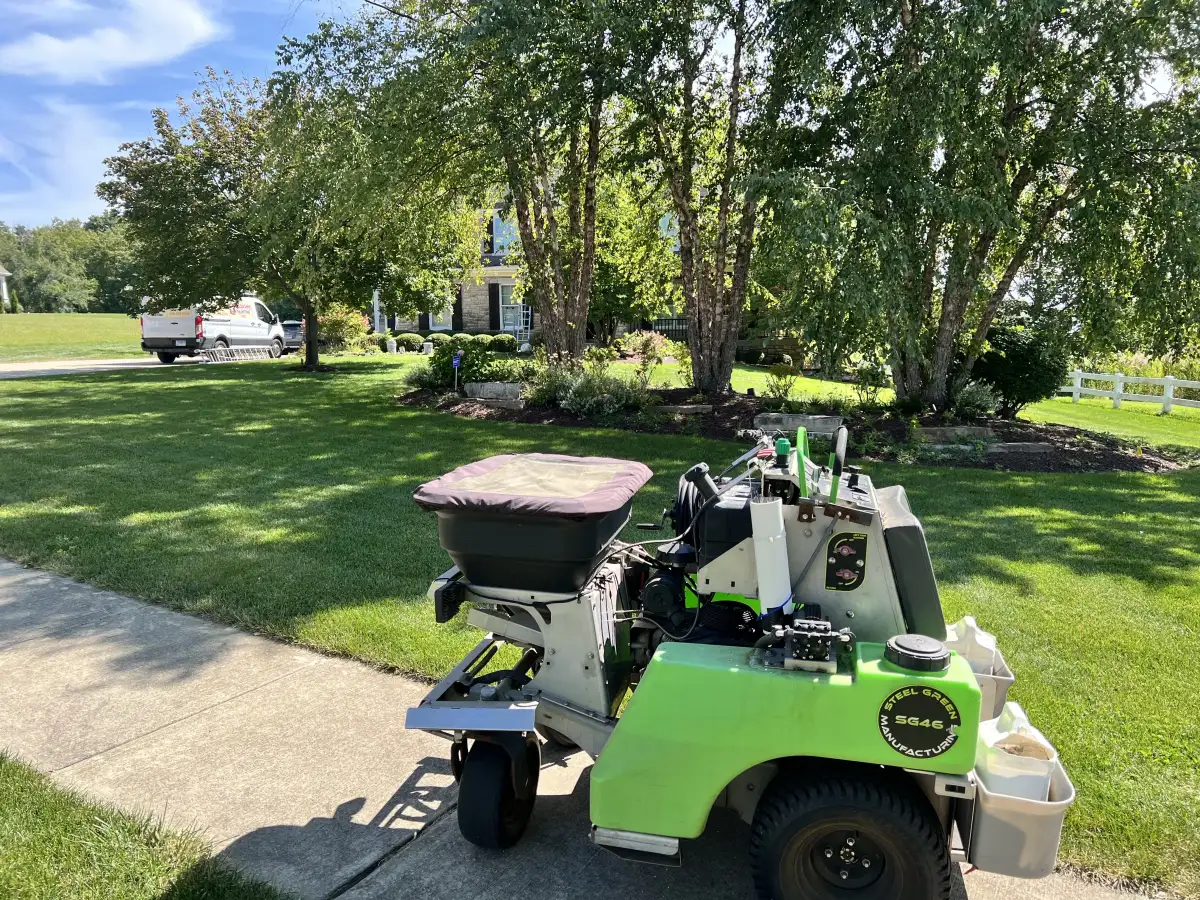
Crabgrass Control Timed for Aurora Lawns
Pre-emergent barriers applied at the precise soil temperature window, plus post-emergent rescue treatments for existing crabgrass — timed to Kane County conditions, not a national calendar.
Why Crabgrass Dominates Fox Valley Lawns
Crabgrass is an annual grassy weed that germinates when soil temperatures reach 55 degrees Fahrenheit at a 4-inch depth. In Aurora and the surrounding Fox Valley, this typically occurs between the last week of March and mid-April, depending on weather patterns. Once established, a single crabgrass plant can produce up to 150,000 seeds before dying at the first frost, seeding the problem for next year.
Kane County's heavy clay soils make the crabgrass problem worse. Compacted soil creates thin turf with bare patches that give crabgrass seeds the sunlight and soil contact they need to germinate. Lawns along Eola Road, in the subdivisions west of Route 59, and throughout North Aurora and Montgomery are especially vulnerable because the builder-grade soil in these areas compacts severely after just one or two seasons.
The only reliable way to prevent crabgrass is a properly timed pre-emergent herbicide application. Applied too early, the product breaks down before germination starts. Applied too late, crabgrass seeds have already sprouted and the barrier is useless. Our technicians monitor soil temperature data from local Kane County weather stations daily during the critical spring window to hit every property at exactly the right time.
For lawns that already have active crabgrass growth, we use targeted post-emergent treatments that kill existing plants without damaging desirable turf species. Read our complete guide on crabgrass prevention for Illinois lawns for the full breakdown of timing, products, and cultural practices.

Crabgrass Control That Starts Before Seedlings Emerge
Crabgrass control works best when spring prevention, summer spot treatment, and fall turf thickening support each other. Better Turf & Snow matches each visit to current soil temperatures, visible weed pressure, and the density of the surrounding grass.
Spring Germination Barrier
Every Better Turf & Snow program includes a pre-emergent barrier applied as local soil temperatures approach 55°F. The application forms a protective layer in the top inch of soil so crabgrass seeds cannot establish root systems during the primary spring germination window.
Dual Pre-Emergent (Platinum)
For lawns with heavy seed pressure or repeated summer breakthroughs, the Platinum program adds a second pre-emergent product: Crew™ combined with Resolute™. That extended residual control helps protect thin edges, curb strips, and hot full-sun areas through rainy July and August stretches.
Visible Crabgrass Knockdown
If crabgrass is already active, we use targeted post-emergent treatment to control young plants before they mature and seed. Early summer cleanup is most effective while plants are small, which is why we ask homeowners to call as soon as flat, light-green patches start spreading into open turf.
The Crabgrass Calendar for Kane County
Late March to mid-April: Soil temperatures approach 55°F. This is the critical pre-emergent application window. Our crews monitor daily soil temperature readings from Aurora and Geneva weather stations and begin applications the moment conditions are right. A delay of even 5 to 7 days can mean the difference between complete prevention and a lawn full of crabgrass by June.
May through June: Crabgrass plants that escaped the pre-emergent barrier begin to appear as light green patches that grow flat and spread outward. Post-emergent treatment during this period is highly effective because the plants are young and vulnerable. Left untreated, each plant begins tillering aggressively and becomes progressively harder to control.
July through August: Mature crabgrass is at its most aggressive during the hottest months. Plants that were not controlled earlier can grow to 12 inches or more and produce seed heads by late August. At this stage, post-emergent treatments are less effective, and the best strategy is to plan for a comprehensive pre-emergent program the following spring while maintaining thick turf through proper fertilization and core aeration to outcompete crabgrass naturally.
September through October: Crabgrass plants die with the first hard frost, but their seeds remain viable in the soil for up to three years. Fall is the ideal time to thicken your lawn through overseeding, which reduces bare soil available for crabgrass germination the following spring.
Crabgrass control is strongest when the lawn is dense before spring arrives. That means mowing at the right height, keeping irrigation consistent during dry spells, correcting compacted soil, and filling bare areas before they become seedbeds. Better Turf & Snow can connect spring pre-emergent service with fall aeration and overseeding when the lawn needs more than a single weed-control visit.
Call (630) 854-7511 for a free lawn inspection and find out which crabgrass treatment approach fits your property's current condition.
Spring Weed Timing Questions
No. Pre-emergent herbicides prevent all seeds from germinating, including desirable grass seed. If you need both overseeding and crabgrass prevention, the best approach is to overseed in fall (August through October) and apply pre-emergent the following spring. By then, the new grass is established enough to withstand the herbicide.
Crabgrass seeds can survive in the soil for up to three years. Even one plant that goes to seed in August can deposit thousands of seeds that germinate the following spring. Consistent annual pre-emergent applications deplete the seed bank over time. Most lawns see a dramatic reduction in crabgrass pressure after two to three consecutive years of properly timed pre-emergent treatment.
Yes. The pre-emergent and post-emergent products we use are EPA-registered and designed for residential use. We recommend keeping pets off treated areas until the product has dried, which typically takes two to four hours. Our pet-safe lawn treatment page has more details on our approach to pet-friendly lawn care.
Stop Crabgrass Before Summer Pressure Builds
Whether your lawn needs a pre-emergent application or targeted summer cleanup, our licensed technicians inspect current weed pressure, turf density, and soil timing before recommending the right next visit.