

De-Icing Services for Commercial Pavement
Pre-storm brine treatment, post-plow salt application, and proactive refreeze monitoring to keep your commercial property safe and compliant throughout Kane County winters.
Two Approaches to Ice Management
Anti-icing is proactive: we apply liquid brine solution to your pavement before a storm arrives. The salt brine layer prevents snow and ice from bonding to the surface, which means plowing removes more snow on the first pass and less de-icer is needed after clearing. Anti-icing uses up to 75 percent less salt than reactive de-icing alone, which reduces cost, environmental impact, and concrete damage.
De-icing is reactive: after snow has been plowed, we apply granular or liquid de-icer to melt residual ice and prevent refreeze. The right product depends on pavement temperature. Rock salt works effectively down to about 15 degrees Fahrenheit. Below that, we switch to calcium chloride or magnesium chloride blends that remain effective to minus 25 degrees, which covers the coldest overnight temperatures typical in the Fox Valley.
The best winter management programs use both approaches in combination. Pre-storm brine treatment reduces the total amount of granular de-icer needed by preventing the ice-to-pavement bond. Post-plow de-icing handles the residual moisture and thin ice layers that plows cannot remove mechanically. And refreeze monitoring between events catches the dangerous daytime-melt-to-overnight-freeze cycle that produces black ice on sidewalks and parking lots.
We serve commercial properties throughout Aurora, Montgomery, Oswego, Geneva, St. Charles, Batavia, and the broader Fox Valley. Call (630) 854-7511 for a site assessment and seasonal ice management quote.
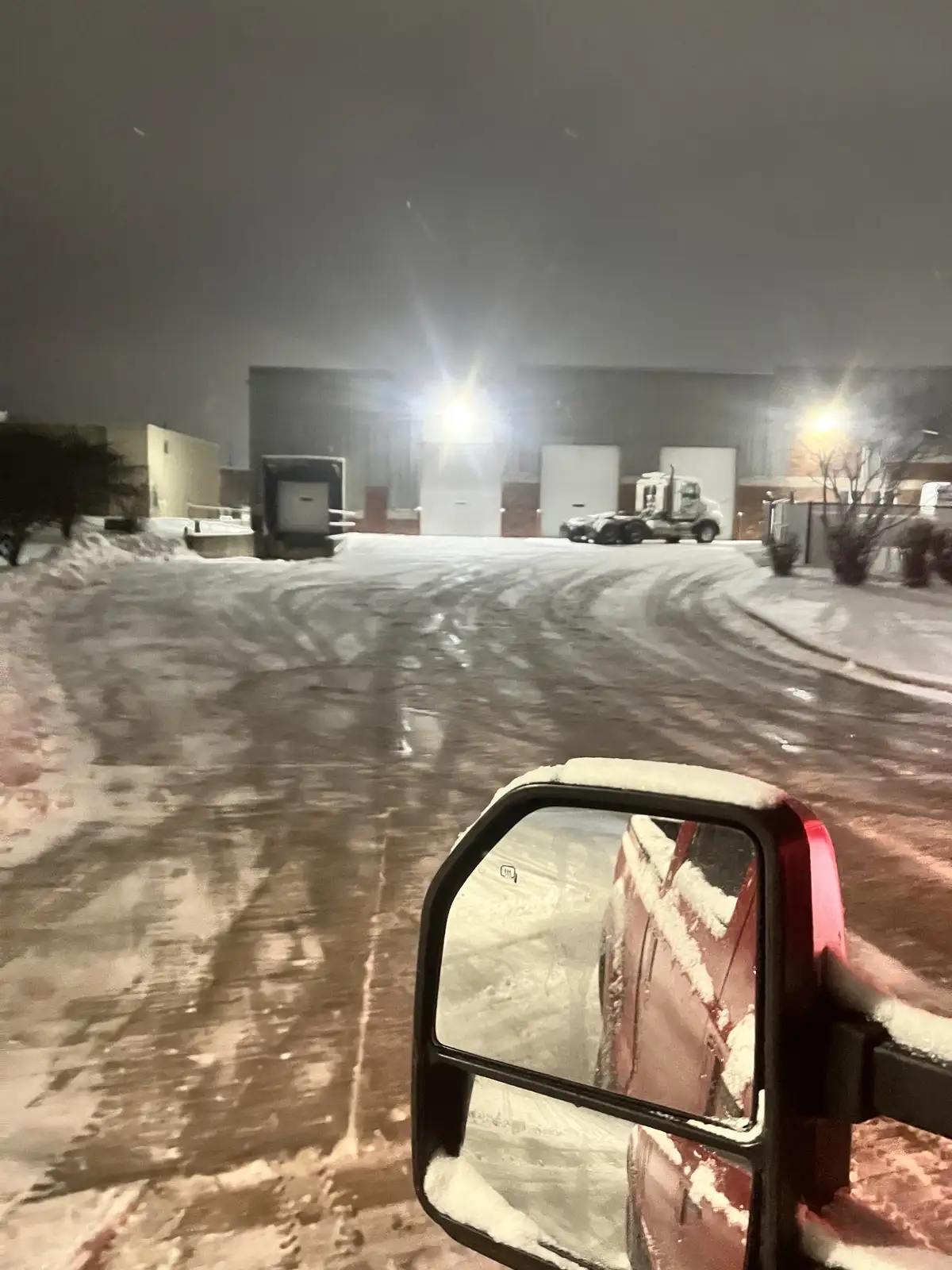
De-Icing Materials We Use
Responsible De-Icing for the Fox Valley
The Fox River is the primary waterway through Kane County, and excessive salt application from commercial properties contributes to chloride contamination in local streams and groundwater. The Illinois EPA has identified elevated chloride levels in several Fox Valley tributaries, and responsible de-icing practices are part of the solution.
Our approach minimizes salt usage without compromising safety. Brine pre-treatment reduces the total volume of granular de-icer needed. Calibrated spreaders apply material at precise rates based on pavement temperature and surface conditions rather than a heavy-handed approach that wastes product. And we offer magnesium chloride options for properties near waterways, wetlands, or environmentally sensitive areas that require lower chloride impact.
Every de-icing application is logged with product type, quantity, pavement temperature at time of application, and coverage area. These records support both your liability documentation and your environmental compliance requirements.
How We Build a De-Icing Plan for Your Property
A good ice management plan starts before the first freeze. We walk the property, mark problem zones, and set service rules that match how the site is actually used.
Commercial de-icing is rarely a one-product decision. A retail center with heavy morning traffic may need pre-opening brine and a second pass after plowing. A medical office may need zero-tolerance treatment at ramps and main entrances while using standard rock salt on the drive lanes. An HOA or apartment property may need extra attention around mailboxes, shared sidewalks, and shaded north-facing walks where ice lingers after the rest of the pavement dries.
We also plan snow storage and drainage because meltwater is what becomes the next ice hazard. If plowed piles drain across a sidewalk or toward an entrance, the site may look clear at 2 p.m. and become slick by 7 p.m. Our crews identify those drainage paths during the site assessment, then pair parking lot plowing, sidewalk clearing, and de-icing so each step supports the next one.
For seasonal clients, we review application history as winter progresses. If a zone repeatedly refreezes or needs heavy product to stay safe, we adjust the route notes rather than treating every event the same. That ongoing refinement is how we control cost, reduce waste, and keep high-liability surfaces safer through the most difficult Fox Valley freeze-thaw cycles.
De-Icing FAQ
Rock salt can accelerate freeze-thaw spalling on concrete that is less than one year old or was not properly cured. For newer concrete surfaces, we recommend calcium chloride or magnesium chloride products that are less corrosive. On mature, well-sealed concrete, rock salt at proper application rates causes minimal long-term damage and remains the most cost-effective option for large commercial surfaces.
We apply brine 2 to 24 hours before a forecasted snow or ice event, depending on conditions. The brine needs time to dry on the pavement surface to form an effective anti-icing barrier. If rain is expected before the snow, we delay application to prevent washout. Our crews monitor NWS forecasts continuously and time applications for maximum effectiveness.
Standard rock salt can irritate pet paws and damage vegetation that borders treated areas. For properties with pet traffic or sensitive landscaping, we offer pet-safe calcium magnesium acetate and magnesium chloride alternatives. These products are less irritating to skin and less toxic to plants while still providing effective ice control. Let us know your preferences during the site assessment.
Get a De-Icing Quote for Your Property
Protect your property, your customers, and your liability exposure with professional ice management. Request a free site assessment and seasonal de-icing contract quote.