
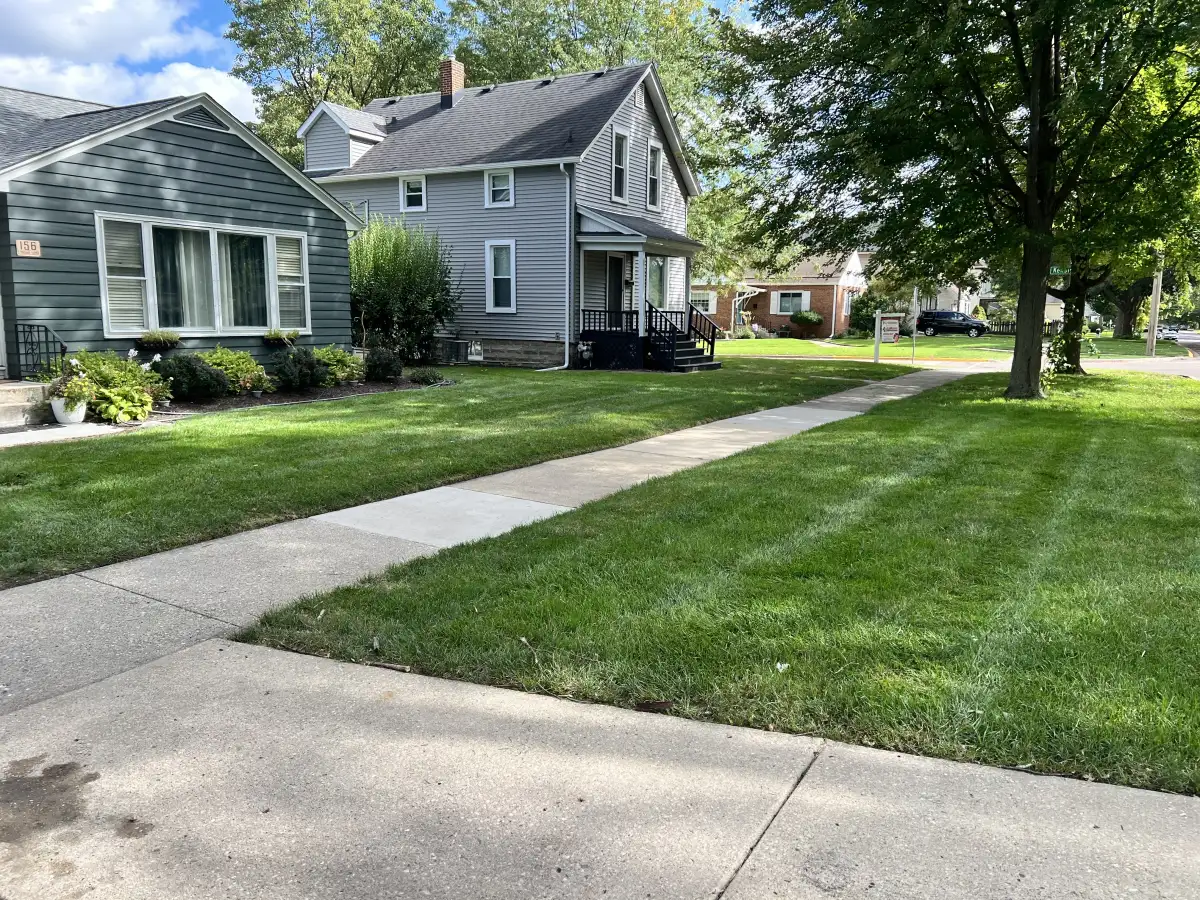
The honest answer is that lawn care cost cannot be judged from a national average or a monthly number alone. One Aurora quote may cover a measured lawn and a season of fertilization and weed-control applications. Another may include mowing, cleanup, aeration, overseeding, or pest treatment. The totals can look similar while buying very different work.
For a useful comparison, define the service first. Better Turf & Snow's lawn care programs coordinate seasonal applications for Fox Valley lawns, with the final price based on your lawn and the program recommended for it. This guide explains how to review that kind of quote without guessing at a one-price-fits-all number.
If you are comparing a broader, diagnosis-led program, the earlier guide to turf management cost factors in Aurora explains how soil, weed pressure, turf density, and repair timing shape the recommendation. Here, the focus is narrower: how to read the price and determine whether two lawn care quotes actually cover the same work.
Short answer: compare the full seasonal total, measured turf area, included visits, and separately priced repairs. A low monthly payment can cost more over a long billing period, while a higher per-visit price may cover more work. The written scope is what makes either number meaningful.
Start by Defining What “Lawn Care” Includes
“Lawn care” can describe several different services. Routine mowing controls height. Fertilization and weed control support turf growth and manage unwanted plants. Core aeration addresses compaction, while overseeding adds grass seed where density needs improvement. Grub, disease, and soil concerns may require still other work.
Before comparing prices, circle the services that appear in both proposals. If one quote covers only recurring applications and another includes a fall renovation, they are not direct competitors. Ask each provider to separate recurring care from optional or corrective work so you can see the cost of each decision.
Five Details That Commonly Change a Lawn Care Quote
1. Measured Turf Area
Pricing should reflect the lawn being treated, not simply the home's lot size. The house, driveway, patio, landscape beds, and other non-turf areas change how much grass is actually in the service area. Confirm whether the front yard, backyard, side yards, and parkway are all included.
2. Number and Purpose of Applications
A shorter program and a more comprehensive seasonal program should not be expected to cost the same. Ask how many visits are planned and what each one is intended to accomplish. The sequence matters because prevention, active weed control, summer support, and fall feeding serve different purposes during the northern Illinois growing season.
3. Current Lawn Condition
A dense lawn that mainly needs seasonal maintenance has a different starting point from thin turf with heavy weed pressure, compacted areas, or suspected insect damage. The condition may not change the base application price, but it can change the additional work needed to reach your goal. That distinction should appear in the quote instead of being discovered after service begins.
4. Corrective and Preventive Add-Ons
Aeration, overseeding, grub treatment, crabgrass prevention, and soil health treatment solve different problems. Some may be part of a program tier; others may be separate. A clear proposal identifies what is included now, what is optional, and what would require approval later.
5. Access and Service Boundaries
Locked gates, narrow access, steep sections, obstacles, and disconnected lawn areas can affect how work is completed. These details should be discussed before the quote is final. They also help prevent a common frustration: assuming a side yard or fenced area is included when the provider priced only the most accessible turf.
Is $200 a Month a Good Price for Lawn Care?
It might be—or it might not. The monthly figure does not tell you how many months are billed, how many visits occur, or what work is included. Multiply the payment by the number of billed months to find the seasonal or annual total, then divide that total by the promised services only as a secondary check. The lowest cost per visit is not automatically the best value if the visits do not address the lawn's actual needs.
| Quote detail | What to confirm |
|---|---|
| Billing | Per visit, monthly, or one seasonal total—and how many payments are required |
| Coverage | Which lawn areas are measured and included |
| Visits | The planned number or range of applications and their seasonal purpose |
| Extra work | Whether aeration, seed, soil work, pest treatment, or callbacks cost more |
| Aftercare | Watering, mowing, access, or traffic instructions you will handle between visits |
If you are comparing lawn care across the city, the Aurora service-area guide gives more context on the local conditions that can shape a recommendation. Location alone should not set the price, but shade, moisture, pavement heat, compaction, and the lawn's starting condition can change which services make sense.
Separate Maintenance Cost From Lawn Repair Cost
This is the easiest way to make a budget clearer. First identify the recurring program that maintains fertility, weed control, and seasonal timing. Then list the work intended to correct an existing limitation, such as compaction or sparse turf. A thin lawn may need aeration and overseeding this fall, but that does not mean the same repair belongs in every season or on every lawn.
Separating the two also helps you prioritize. If the whole recommendation does not fit the current budget, ask which item protects the lawn now, which improvement has the best timing window, and which work can reasonably wait. A provider should be able to explain the tradeoff without turning every option into an emergency.
Red Flags When a Low Price Hides an Unclear Scope
- The proposal uses a package name but does not list the included services or visits.
- The quote is based on an assumed lot size without confirming the turf areas to be treated.
- Repair work is recommended without explaining the lawn condition it is meant to address.
- The provider cannot explain how added work will be approved before it is billed.
- The sales promise focuses on instant results without accounting for the lawn's starting condition, weather, or homeowner aftercare.
A detailed proposal does not need to be complicated. It should simply let you answer three questions: What work am I buying? When should it happen? What could change the total?
How to Get a More Accurate Lawn Care Estimate
Show the provider the full service area and point out places that behave differently—shade beneath mature trees, turf beside hot pavement, low areas that stay wet, thin sections, pet-use areas, and places where weeds return. Share recent lawn history when you know it, including seeding, sod, grub damage, irrigation problems, or treatments from another provider.
Then name your goal. “Fewer weeds” may call for a different plan than “repair the thin backyard” or “build a complete seasonal program.” Better Turf & Snow serves Aurora and the surrounding Fox Valley service area, so the next step is a property-specific conversation rather than a generic national cost calculator.
Frequently Asked Questions
How much does lawn care cost in Aurora, Illinois?
There is no single responsible price for every Aurora lawn. Cost depends on the measured turf area, current condition, included applications, visit schedule, access, and whether corrective services are part of the proposal. A property-specific estimate is the clearest way to compare the work and the seasonal total.
Is $200 a month a good price for lawn care?
$200 per month may be reasonable for one scope and poor value for another. First confirm whether the quote covers mowing, seasonal treatments, or both; how many service visits are included; how many months are billed; and which repairs or callbacks cost extra. Compare the full seasonal total and written scope instead of the monthly payment alone.
What should a lawn care quote include?
A useful quote should identify the lawn areas covered, the services and approximate seasonal timing, the number or range of visits, the billing schedule, separately priced work, required homeowner aftercare, and how added work will be approved.
Are aeration and overseeding included in regular lawn care pricing?
Do not assume they are included. Core aeration and overseeding address specific compaction and turf-density needs and may be quoted separately from recurring fertilization and weed-control applications. The proposal should state clearly whether either service is included.
What is the one-third rule in lawn care?
The one-third rule is a mowing guideline: avoid removing more than one-third of the grass blade in a single mowing. It does not set service pricing, but following it can reduce stress on your lawn and help protect the value of a treatment program.