
Aurora homeowners usually search for turf management after the same problems repeat: crabgrass breaks through in July, dandelions and clover keep returning, turf thins along sidewalks and driveways, or fertilizer improves color for a short time without building density. Because turf management can mean very different things from one provider to another, this guide focuses on the practical questions local homeowners need answered before booking.
Better Turf & Snow serves Aurora, IL and nearby Fox Valley communities where lawns deal with clay-heavy soil, freeze-thaw compaction, spring moisture, summer heat stress, and fall repair windows that can be easy to miss. Before you choose a program, use these questions to compare whether a provider is selling a list of visits or building a plan around soil, timing, turf density, weed pressure, and the way your property is used.
Lawn Size, Shape, and Access
A turf management estimate should start with condition, not a generic package name. Ask whether the provider will look at sunny and shaded areas, slopes, sidewalk edges, pet-use areas, drainage patterns, mowing height, watering routine, and places where the turf is already thin. A lawn compacted along a driveway may need a different approach than a shaded backyard with broadleaf weeds.
This matters because turf problems can look similar from a distance. Brown patches may come from drought stress, mower height, disease pressure, or grub activity. Thin turf may come from poor soil structure, low fertility, heavy traffic, or seed varieties that are not holding up. Better Turf & Snow uses the estimate conversation to sort through those factors before recommending fertilization and weed control, core aeration, overseeding, soil health work, or a full seasonal plan.
Program Scope: Fertility Schedule or Full Turf Plan?
A basic fertilizer schedule can green up a lawn, but it may not solve why weeds keep finding open soil. Turf management should connect fertilization, weed control, soil conditions, pest monitoring, repair timing, and homeowner maintenance habits into one plan. Ask what each visit is meant to accomplish and how one application supports the next.
For Aurora lawns, this distinction is important. Spring prevention, late-spring broadleaf control, summer stress monitoring, fall repair, and winterizer timing all affect one another. If a company cannot explain how the program changes when the lawn is compacted, thin, heavily shaded, or newly sodded, it may be offering lawn treatments rather than real turf management.
How Will the Program Handle Aurora's Weed Pressure?
Crabgrass, dandelion, clover, plantain, and other broadleaf weeds usually take advantage of open turf. A useful program should explain both prevention and correction. Spring crabgrass prevention is time-sensitive because it works before germination. Broadleaf weed control is most effective when weeds are actively growing and can take in the treatment.
Ask how weed control fits into the full season. If the answer is only spot spraying, the lawn may keep reopening. The stronger long-term answer is dense turf: balanced feeding, correct mowing height, fall repair where needed, and soil improvement that helps roots compete. That is why crabgrass treatment and weed control should be discussed alongside turf density rather than treated as isolated tasks.
What Role Do Aeration and Overseeding Play?
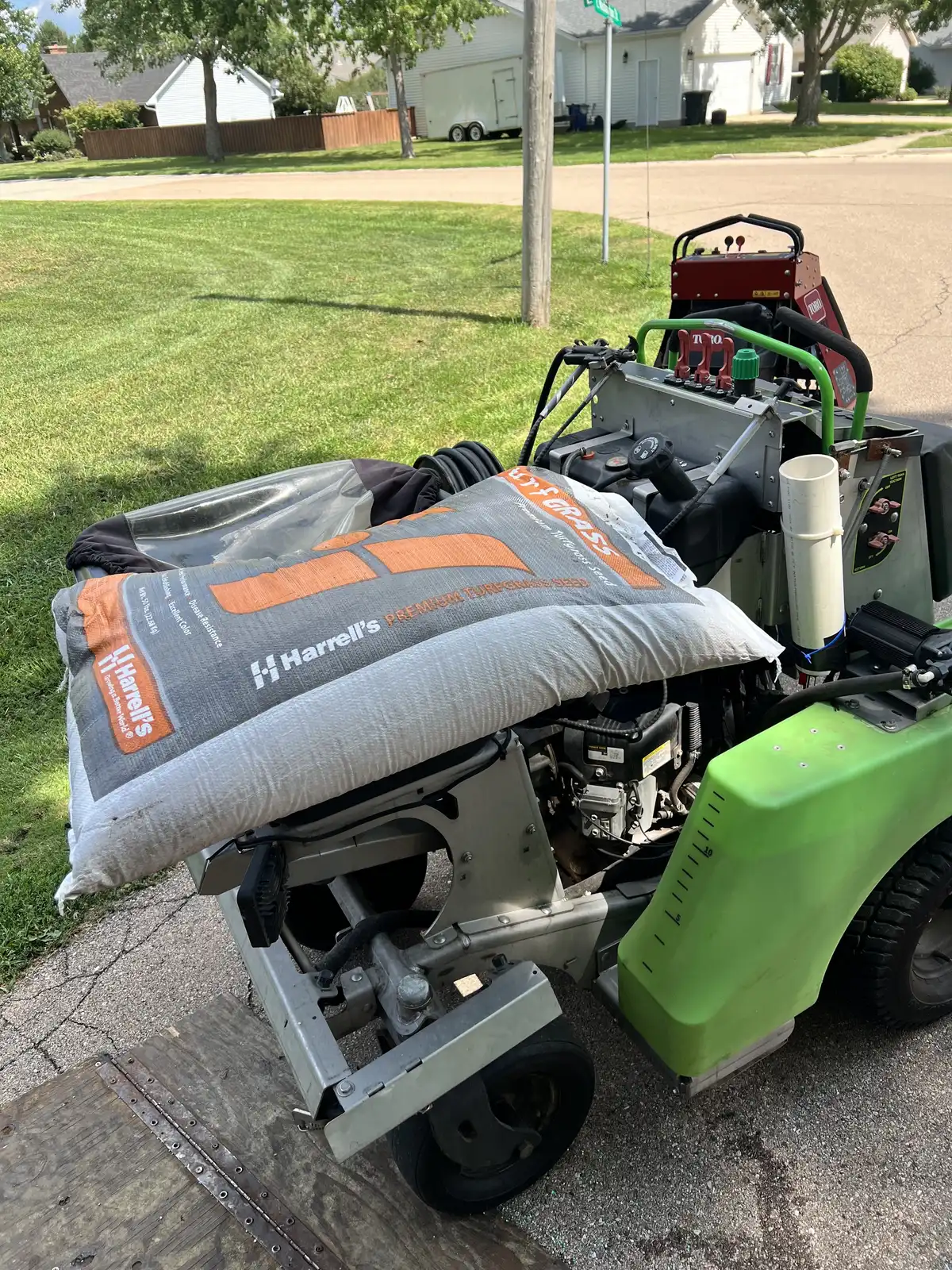
Many Aurora lawns benefit from fall repair work, especially if the soil is hard underfoot or the grass has thin areas where weeds keep filling in. Core aeration removes plugs of soil so oxygen, water, and nutrients can reach the root zone. Overseeding introduces desirable grass into open areas so the lawn can become thicker instead of leaving room for weeds.
Ask whether aeration or overseeding is being recommended because the lawn needs it or because it is part of every quote. A dense, well-rooted lawn may not need the same repair schedule as a compacted yard with poor drainage. For many Fox Valley properties, the best time to plan these services is late summer into fall, when cool-season turf can establish before winter.
Compaction, Soil Health, and Repair Work
Aurora-area lawns often deal with clay-heavy soil and compaction from weather, foot traffic, mowing, and construction disturbance. Fertilizer supports growth, but it cannot fully overcome soil that sheds water, holds too much moisture, or limits root development. Ask whether the provider evaluates soil structure and whether soil health treatment should be part of the plan.
Soil health does not need to be overcomplicated for a homeowner. The question is whether the lawn has enough root support to use the treatments being applied. If color improves after each visit but the lawn still thins under heat or traffic, the plan may need deeper root-zone work instead of more of the same product.
What Happens Between Visits?
Turf management is a shared process. Treatment timing matters, but so do watering, mowing height, leaf cleanup, pet patterns, and how quickly issues are reported. Ask what you should do between visits and how the company communicates after each application. A clear service note should tell you what was applied, what to watch for, and whether watering or mowing timing should change.
This is especially important for homeowners comparing lawn care programs. One company may list more visits, while another may provide better timing, clearer communication, and more useful recommendations. The strongest program is the one that helps you understand why each step is being taken.
What Results Should I Expect in the First Season?
A healthy turf program can improve color, reduce weed pressure, and create a more consistent lawn, but the timeline depends on starting condition. A lawn with a few weeds and decent density can respond faster than a compacted lawn with years of thinning. Fall aeration and overseeding may not show full value until the new turf has time to establish and thicken.
Be careful with promises that sound instant. The goal of turf management is not one quick green-up. It is a stronger turf stand that handles Aurora's growing season more consistently. Ask what changes should be visible after the first few visits, what may take a full season, and what conditions could limit results.
Does the Service Area Fit My Property?
Better Turf & Snow serves Aurora and nearby Fox Valley communities including Oswego, Yorkville, Montgomery, Geneva, and Plainfield. Explore all communities we serve to find lawn care coverage near your property.
If you have an Oswego property specifically, Better Turf & Snow also has a dedicated guide to turf management in Oswego, IL with local planning factors for that area. That page is useful for homeowners comparing Aurora and Oswego conditions because it explains builder soil, compacted clay, drainage variation, and service timing in a nearby community.
FAQ: Aurora Turf Management Pricing
What questions should Aurora homeowners ask before booking turf management?
Ask what the program includes, how timing is adjusted for Aurora's cool-season turf, how weeds, compaction, and soil health are evaluated, whether aeration or overseeding may be needed, and whether the estimate is based on the lawn's actual condition.
How is turf management different from basic lawn care?
Basic lawn care may refer to one service, while turf management connects fertilization, weed control, soil health, aeration, overseeding, pest monitoring, drainage concerns, and seasonal timing into a planned program.
When should turf management start in Aurora, IL?
Early spring is best for crabgrass prevention and spring feeding. A summer inspection can still help with active weeds, drought stress, grub risk, and planning fall repair work.
What should be included in a turf management estimate?
A useful estimate should explain the lawn's current condition, recommended visit schedule, optional repair services, homeowner responsibilities, and realistic expectations for visible improvement.
Can turf management help with thin or patchy Aurora lawns?
Often, yes. Thin turf may need adjusted fertility, core aeration, overseeding, soil health treatment, grub prevention, or mowing and watering changes. A lawn inspection helps identify the right combination.
Ready to ask better questions about your lawn? Request a turf management estimate or call 630-528-2122. Better Turf & Snow can help you compare a seasonal turf program, weed control, soil health planning, aeration, and overseeding for your Aurora lawn.