
The last week of August gives Aurora homeowners a useful view of what the lawn has handled all summer. Thin grass, persistent weeds, dry edges, shaded trouble spots, compacted paths, and places where water runs off are easier to map before fall growth changes the picture. That makes this a good moment to ask what a turf management plan will address now, later this fall, and next spring.
Better Turf & Snow approaches turf management as coordinated seasonal care rather than a string of unrelated applications. The questions below help connect a lawn's current condition with fertilization, weed control, soil health work, pest monitoring, aeration, or overseeding only where those services fit.
Use two timelines when you compare recommendations. Ask what can reasonably be done this fall and what needs an earlier preventive window next spring. A clear proposal should not treat every lawn issue as an immediate application.
1. What Did the Lawn Reveal During Summer?
Begin with a walk around the property. Point out where grass thinned, weeds returned, soil stayed hard, or water collected or ran across the surface. Also note how sun, mature shade, foot traffic, pets, slopes, and irrigation differ from one area to another. The Aurora service guide explains why moisture, shade, and soil conditions can vary across local properties.
Ask the provider to separate symptoms from likely causes. Thin turf can follow summer stress, shade, compaction, poor establishment, insect activity, or uneven watering. A brown patch does not identify one solution on sight. The first recommendation should explain what the provider observed, what it may indicate, and whether the right next step is treatment, repair, or monitoring.
2. Which Work Belongs in a Seasonal Program?
Ask what each visit is meant to accomplish and how the visits support one another. Fertilization and weed control can form part of a recurring program, while soil health treatment, grub treatment, core aeration, or overseeding address different conditions and may be recommended separately.
The written scope should distinguish routine visits from corrective work. That prevents two proposals with similar package names from looking equivalent when one includes a service the other prices as an option.
- Routine program: included visits, applications, monitoring, and covered lawn areas.
- Condition-based work: aeration, overseeding, soil health, or pest services recommended for a stated reason.
- Homeowner care: mowing, watering, access, and any instructions after service.
- Approval: how separately priced work is presented before it is scheduled.
3. What Can Still Help This Fall?
Late summer into fall can be useful for evaluating compaction and thin turf in Aurora's cool-season lawns. Ask whether aeration or overseeding fits the lawn's condition, whether there is enough time for establishment, and what watering would be required. The answer should reflect the site and weather—not the date alone.
Also ask which opportunities have passed for the year. For example, work aimed at early-season crabgrass prevention belongs on a different timeline than fall repair. A practical plan can address current needs while documenting preventive priorities for spring.
4. If Seed Is Recommended, Why Does It Fit This Area?
“What is the best grass seed for northern Illinois?” is a common question, but the useful answer depends on the property. Sun exposure, moisture, foot traffic, the existing turf, and the homeowner's maintenance expectations all matter. A sunny front yard and a shaded side yard may not call for the same recommendation.
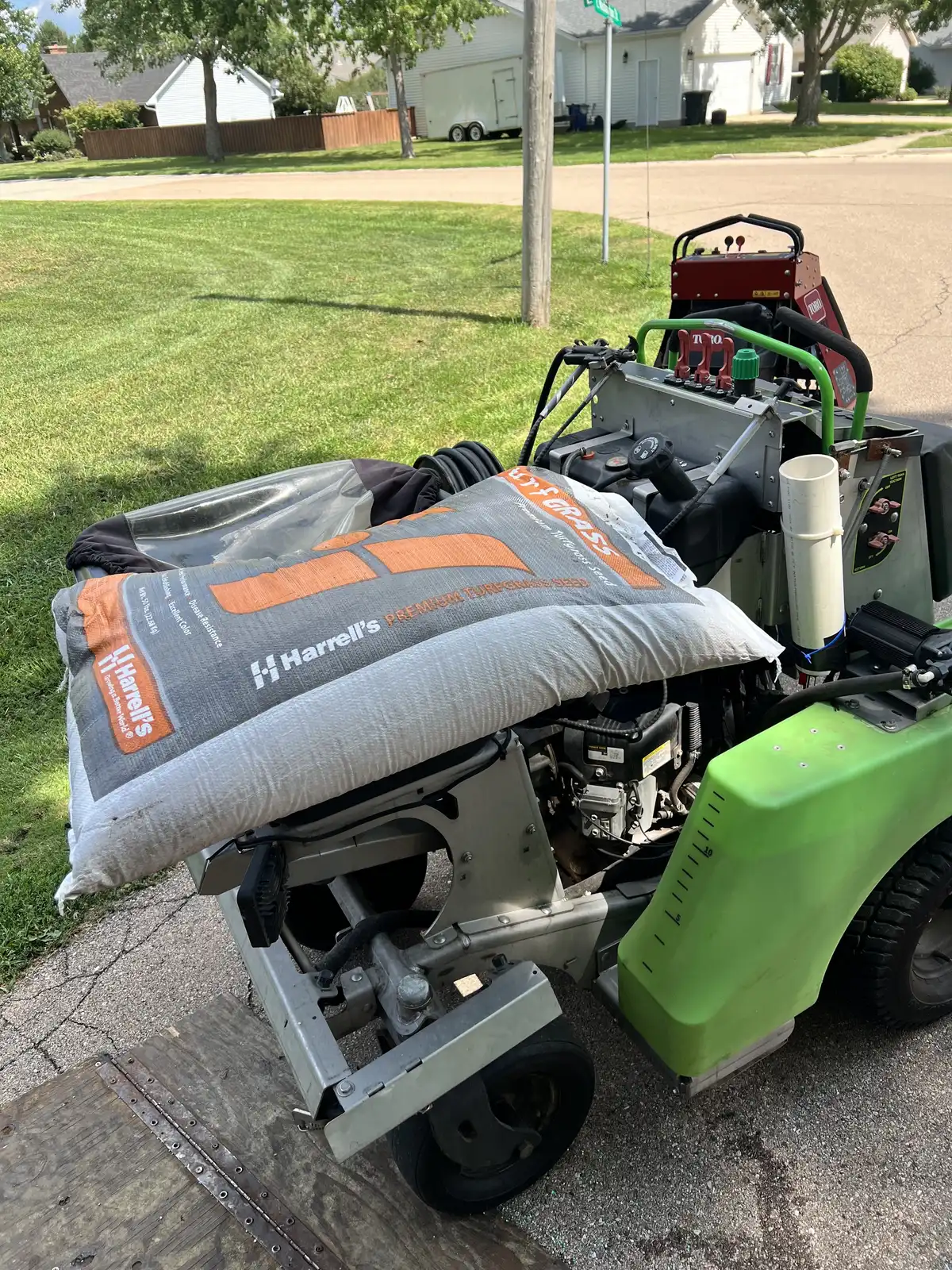
Before approving overseeding, ask which cool-season seed or blend is proposed, which part of the lawn it is intended for, how the seedbed will be prepared, and what establishment care you will handle. Seed choice and follow-through belong in the same conversation.
5. How Long Will Mowing and Watering Continue?
Illinois lawns do not stop growing on one dependable calendar date. Growth slows with changing weather, so mowing should follow the grass rather than an arbitrary cutoff. Ask what mowing height to maintain, when to mow after a visit, and how to avoid removing too much leaf tissue at once.
Watering guidance also needs context. Existing turf, a treated lawn, and newly seeded areas can have different needs. Discuss rainfall, irrigation coverage, runoff, and shaded areas before work begins. The University of Wisconsin lawn maintenance guide provides practical cool-season guidance on mowing, watering, seasonal timing, compaction, shade, weeds, diseases, and insects.
6. What Exactly Does the Estimate Cover?
Lawn size is only one estimating factor. Access, current condition, included applications, visit frequency, optional repair work, and the areas to be treated can all affect the scope. Ask whether billing is per visit, seasonal, or ongoing, and confirm that additional work requires approval.
Compare estimates line by line: the concern being addressed, proposed service, timing, included follow-up, homeowner responsibilities, and price. That will show whether two plans solve the same set of problems.
7. What Information Will You Receive After Each Visit?
Ask how completed work, lawn observations, aftercare, and next steps will be communicated. You should know what happened at the property and why the next recommendation belongs in the plan. Also clarify who to contact if weeds return quickly, discoloration spreads, turf loosens near the soil, or new seed does not establish as expected.
Good turf management makes the next decision easier to understand. Some changes call for observation, others for an adjustment to mowing or watering, and some for a separately approved service.
Frequently Asked Questions
Is late August too late to start turf management in Aurora?
No. Late August is a useful time to evaluate summer stress, thin areas, weed pressure, compaction, and drainage. Some fall repair work may still fit the current season, while preventive work with an earlier timing window can be planned for spring.
What month does grass stop growing in Illinois?
There is no dependable calendar date. Cool-season lawn growth slows as soil and air temperatures fall, so Aurora homeowners should keep mowing based on actual growth rather than stopping on a preset date.
What is the best grass seed for northern Illinois?
The best fit depends on sun, moisture, traffic, the existing turf, and how the lawn will be maintained. Before overseeding, ask why a recommended cool-season seed or blend fits the specific area of the property.
What should a turf management estimate include?
A useful estimate should identify the lawn areas covered, included visits and applications, separately priced services, seasonal timing, homeowner aftercare, billing schedule, and how additional work will be approved.
Does Better Turf & Snow provide turf management in Aurora, Illinois?
Yes. Better Turf & Snow provides turf management and lawn care in Aurora and its listed Fox Valley service areas. Homeowners can request an estimate through the contact page or call 630-528-2122.