
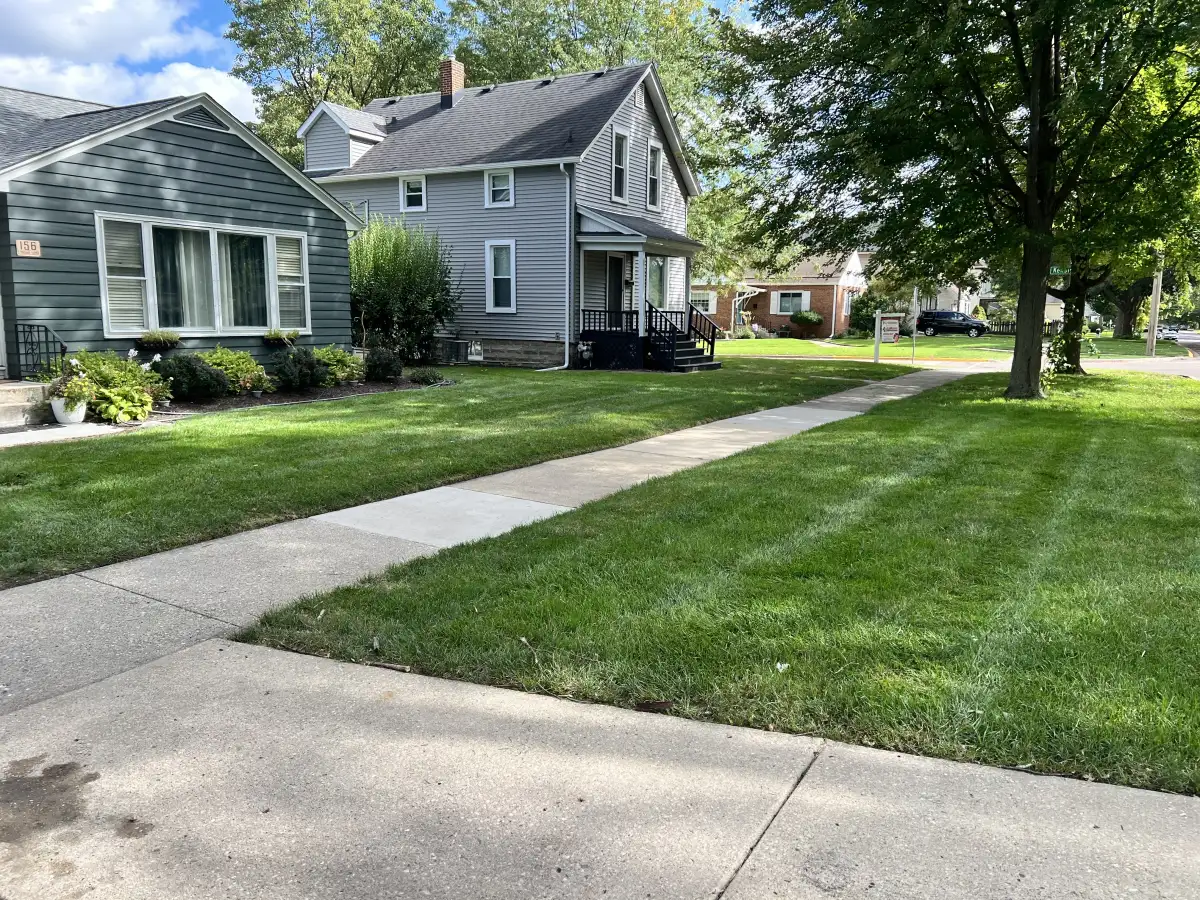
Booking turf management is easier when the conversation starts with the lawn instead of a package name. Aurora properties can differ in shade, traffic, surface drainage, weed pressure, and soil compaction even when they are only a few blocks apart. Those conditions affect which work makes sense now, which work belongs later in the growing season, and what the homeowner must do between professional visits.
The goal of a turf management plan is to coordinate the useful steps across the season. That may include fertilization and weed control, soil health work, pest prevention, or repair with aeration and overseeding. It should not mean automatically adding every available service. Use the questions below to find out whether the recommendation connects to what is actually happening on your Aurora lawn.
Before the estimate: walk the property once in daylight. Note the thinnest turf, recurring weeds, heavy shade, high-traffic paths, places where water runs off or collects, and any area that changed quickly. A few specific observations lead to a more useful conversation than asking for a general lawn treatment.
1. What Lawn Conditions Are Driving the Recommendation?
Ask the provider to connect every recommendation to an observable condition or a seasonal need. Thin grass beside a shaded fence is a different problem from turf worn by regular foot traffic. Water that runs across a hard surface points to a different concern than grass that wilts evenly during a dry stretch. A weed-filled area may need weed control, but it may also need a plan for improving turf density so open soil does not remain an easy place for weeds to return.
A clear answer should describe what is known, what still needs to be monitored, and what outcome each part of the plan is meant to support. Be cautious with a recommendation that sounds identical for every property or treats color alone as a complete diagnosis.
- Show the problem area: walk to the thin, weedy, shaded, compacted, or slow-draining section.
- Ask what the evidence suggests: similar symptoms can come from different causes.
- Define the goal: weed reduction, stronger density, better rooting, or repair are not the same objective.
- Separate treatment from monitoring: some conditions should be watched before another service is added.
2. What Is Included, and What Would Be Quoted Separately?
Program names do not make two proposals equivalent. Ask for the visit schedule, the purpose of each visit, the applications included, and any services that depend on lawn condition. Fertilization and weed control may form the core of a seasonal schedule, while soil health treatment, insect work, aeration, or overseeding may be separate recommendations.
Also clarify whether the estimate covers the whole lawn or selected areas, whether spot treatments are part of the program, and how a new concern is handled after service begins. This makes the price easier to compare and reduces surprises when the lawn needs something outside the original scope.
3. How Does an August Start Change the First-Season Plan?
A mid-August start is not the same as beginning before spring growth. By this point, summer stress, recurring weeds, thin turf, and compacted traffic patterns may be easier to see. That makes August useful for evaluation and late-season planning. It does not bring back an earlier preventive window, so ask the provider to separate useful work now from items that should be scheduled for fall or the following spring.
For northern Illinois cool-season lawns, late summer into early fall is commonly the time to discuss repair. Core aeration can be considered where compaction limits the movement of air and water into the soil. Overseeding can be considered where existing turf needs added density. Neither service should be treated as automatic. The recommendation should explain the target area, timing, preparation, and aftercare.
For more local context, review the Aurora turf management and lawn care guide. It explains how shade, moisture, and soil conditions can change priorities across properties in the city.
4. What Will I Need to Do Between Professional Visits?
A turf program still depends on mowing, watering, access, and observation between visits. Ask for instructions that match the current weather and the work performed. If seed is added, the watering and mowing plan will differ from routine care. If a product is applied, follow the service-specific directions provided after the visit.
-
Mowing
Ask about mowing height, timing after service, and how to handle fast growth. The standard one-third rule means avoiding removal of more than one-third of the grass blade in one mowing.
-
Watering
Clarify when watering is needed, how rainfall changes the plan, and what to do if water runs off before soaking in. More water is not a complete answer to every dry-looking area.
-
Access and updates
Confirm gates, pets, toys, parked vehicles, and how to report spreading discoloration, loose turf, new weeds, or areas that fail to recover.
The University of Wisconsin lawn maintenance guide covers mowing, watering, fertilization, and common turf problems for cool-season lawns. Its guidance reinforces why routine homeowner care and professional treatments have to work together.
5. How Will Shade, Compaction, and Water Movement Affect the Plan?
Some recurring lawn problems are site problems first. Mature shade can limit turf density. Repeated traffic can compact soil. Downspouts, slopes, and low areas can change how water moves across the property. Fertilizer cannot correct deep shade or a drainage problem by itself, and adding seed without addressing the underlying condition may lead to another thin area.
Ask whether the recommendation changes by zone. A sunny front lawn may need a different approach than a shaded side yard. A compacted path may be a better candidate for targeted aeration than an area where turf is already dense. If standing water or drainage infrastructure is involved, that issue may need attention beyond routine turf service.
6. How Will Completed Work and Progress Be Communicated?
Before booking, find out what you will receive after each visit. Useful documentation identifies the work completed, products applied, relevant directions, observed changes, and the next scheduled priority. Better Turf & Snow states that customers receive service reports with photos, products applied, and recommendations after visits.
Ask what happens when conditions change. Weather can alter timing, and a lawn may reveal a problem that was not obvious at the estimate. A clear process should explain whether the next visit is adjusted, whether a new recommendation is presented for approval, and what you should monitor in the meantime.
7. How Should I Compare the Price and the Commitment?
Compare the scope before comparing the total. Lawn size, access, number of visits, included applications, condition-based work, and follow-up can all change the price. A proposal with a lower headline number may simply cover fewer services. Another may include work the property does not currently need.
Ask whether the proposal is seasonal or ongoing, how billing is scheduled, what happens if you move or sell, and whether optional work requires separate approval. The provider should be able to explain the plan in plain language. You should know what you are agreeing to, what is not included, and when you will be asked to make another decision.
A useful comparison has six columns: lawn concern, recommended service, reason for the service, timing, homeowner responsibility, and price. If a proposal cannot fill in those details, ask for clarification before booking.
Frequently Asked Questions
What should I ask before booking turf management in Aurora?
Ask what lawn conditions support the recommendation, what is included, which services are optional, when visits are scheduled, what you must do between visits, how progress is documented, and how the proposal handles changes during the season.
Is turf management the same as fertilization and weed control?
Not necessarily. Fertilization and weed control can be important parts of a program, while turf management looks at the lawn across the season and may also account for soil condition, compaction, thin areas, insects, aeration, overseeding, mowing, and watering.
When should an Aurora lawn be fertilized?
Fertilization timing should match northern Illinois cool-season turf, current weather, lawn condition, and the product being applied. Ask for the purpose and timing of each visit rather than assuming the same application belongs on every lawn at the same time.
Should aeration and overseeding be included in every turf program?
No. Core aeration should connect to conditions such as compaction, and overseeding should connect to a need for added turf density. When either is recommended, ask about timing, preparation, watering, mowing, and seed establishment after the work.
What should I do before a turf management estimate?
Note where grass is thin, weeds return, water runs off or collects, shade is heaviest, and traffic is concentrated. Share recent treatments and explain how you mow and water so the estimate starts with the lawn's actual history and conditions.
Does Better Turf & Snow provide turf management in Aurora, Illinois?
Yes. Better Turf & Snow provides turf management and lawn care in Aurora and other listed Fox Valley service areas. Request an estimate online or call 630-528-2122 to discuss your lawn.