
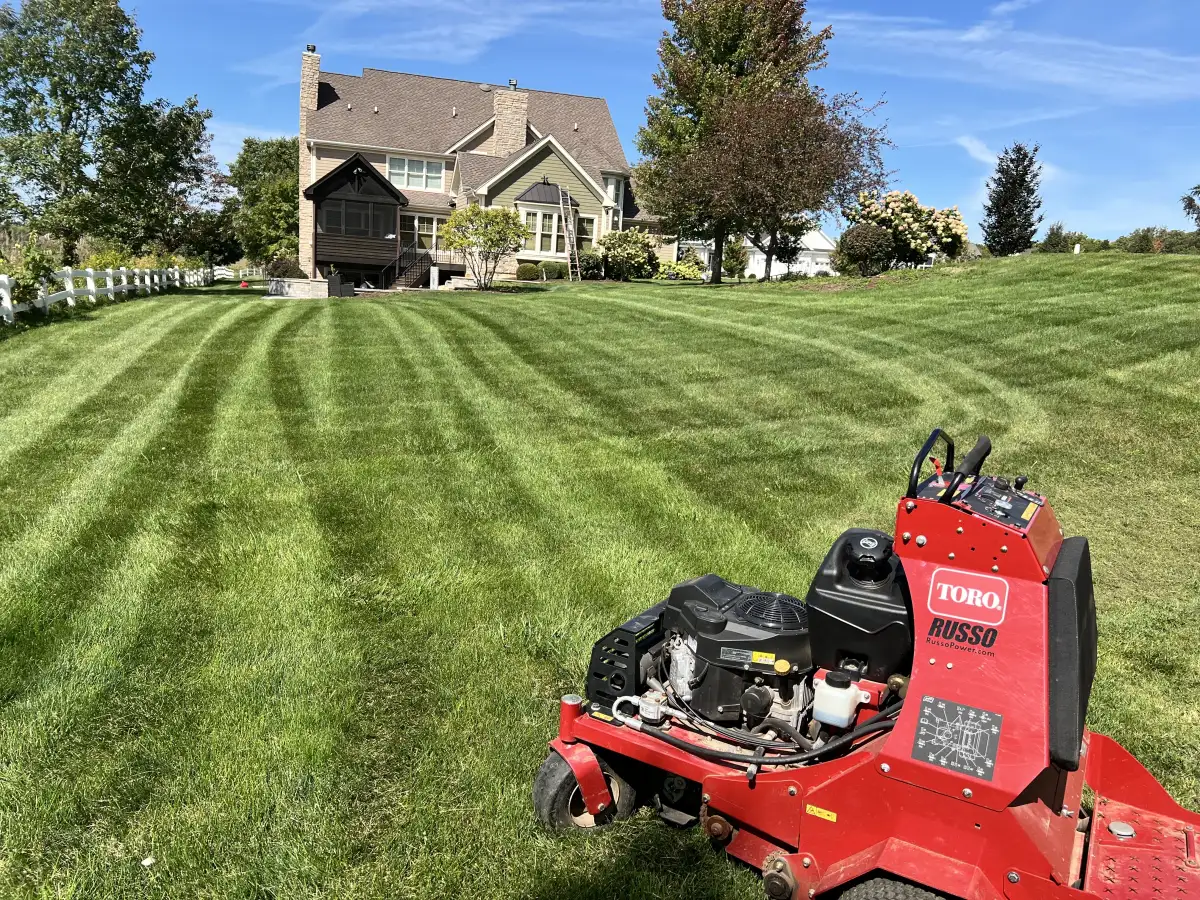
Early August gives Aurora homeowners a useful snapshot of how a lawn is handling summer. Thin areas are easier to see, recurring weeds have declared themselves, compacted paths may shed water, and poor mowing or watering habits can become more obvious. Those clues make this a productive time to discuss turf management—as long as the conversation separates what can help now from work that belongs in fall or the next spring cycle.
A good first discussion is not about buying the longest list of treatments. It is about connecting current lawn conditions to a sensible seasonal plan. Before booking, ask how the provider identifies the problem, what the program includes, what you will need to do between visits, and how the price reflects the actual scope.
Start here: write down where the lawn is thin, where water runs off or collects, which weeds keep returning, and what changed during hot or dry weather. These observations give the provider a better starting point than asking for a generic “lawn treatment.”
1. What Problem Is the Turf Program Supposed to Address?
“The lawn looks bad” can describe several different conditions. Thin grass may be associated with shade, traffic, compaction, inconsistent moisture, or a combination of factors. Weeds may be the most visible symptom, but open turf and stressed grass can leave space for them to return. Discoloration may reflect heat and moisture stress, disease, insects, or another site condition.
Ask which visible signs support the recommendation. The answer should identify the lawn concern and the goal: for example, reducing broadleaf weeds, improving turf density, supporting root development, or preparing compacted areas for repair. If the provider cannot explain why a service belongs in the plan, ask for more detail before approving it.
- Thin or bare areas: note shade, foot traffic, pet use, slopes, and nearby pavement.
- Recurring weeds: identify where they return and whether the surrounding turf is dense or open.
- Runoff or puddling: observe whether water enters the soil or moves across the surface.
- Unusual color or texture: note when it appeared, whether it is spreading, and how the grass responds to watering.
2. Is This Turf Management, Lawn Care, or a Single Treatment?
These terms are sometimes used as if they mean the same thing. They do not always describe the same scope. Lawn care can include routine property upkeep, while turf management coordinates plant health needs across the growing season. A single application may address a specific issue, but it does not automatically provide a season-long plan.
Better Turf & Snow describes its turf approach as coordinated seasonal care that can connect fertilization and weed control, crabgrass prevention, soil health, and repair recommendations. Ask which parts are in the proposed program, which are condition-based, and which would be quoted separately. That distinction matters when you compare two estimates that use similar names.
3. How Much Work Will the Lawn Need Between Visits?
Professional visits do not replace the homeowner’s role. Mowing, watering, traffic, and post-service directions all affect how the turf responds. Ask for practical instructions that match the season and the lawn rather than a vague reminder to “keep up with maintenance.”
-
Mow without scalping
Follow the one-third rule: avoid removing more than one-third of the grass blade in a single mowing. A sharp blade and appropriate height help reduce added stress.
-
Water for conditions
Ask how recent rain, shade, soil, and heat should affect the watering plan. Persistent runoff can point to a different problem than simply needing more water.
-
Report meaningful changes
Spreading patches, loose turf, new weeds, or poor recovery are useful observations. Early communication helps determine whether to monitor or reassess.
The one-third rule is a standard mowing principle explained in the University of Wisconsin lawn maintenance guidance. It is especially useful in summer because cutting too much leaf tissue at once adds stress when the lawn is already dealing with heat or limited moisture.
4. Is Early August a Good Time to Begin?
It can be. An August evaluation can document current weed pressure, mowing and watering stress, insect concerns, thin areas, and compacted soil. It can also establish which work is timely now and which should be scheduled for a stronger seasonal window. What it cannot do is recreate a spring prevention opportunity that has already passed.
Late summer into early fall is generally the most useful local window to discuss repair work for thin or compacted turf. Core aeration may be appropriate when compaction limits air, water movement, and root growth. Overseeding may be appropriate when existing turf needs added density. Neither should be automatic; each should connect to a condition on the property and include clear aftercare expectations.
The Aurora lawn care and turf management guide provides more local service context, including the seasonal pressures that shape lawn decisions in the area.
5. How Should I Compare Turf Management Prices?
There is no universal monthly number that tells you whether a turf program is a good value. Property size, access, visit frequency, included applications, follow-up, and separately recommended repair work can all change the scope. A lower monthly figure may cover less work; a higher figure may include services the lawn does not need. Price only becomes useful when the underlying plan is clear.
Ask for enough detail to compare the total service rather than one headline number:
- How many scheduled visits are included, and what is each visit intended to address?
- Are spot treatments, follow-up checks, or visit notes included?
- Are aeration, overseeding, soil work, or pest treatments separate?
- What lawn access, watering, mowing, or cleanup responsibilities belong to the homeowner?
- How are new concerns handled if the plan needs to change during the season?
6. What Will I Know After Each Visit?
Ask how completed work and next steps are communicated. Better Turf & Snow provides customers with a service report that includes photos, products applied, and recommendations after visits. That record can help you connect each visit to the larger plan and know what needs attention before the next one.
Clear communication also helps set realistic expectations. Weed response or color can change sooner than density, soil condition, or recovery in shaded and heavily used areas. Weather and homeowner follow-through still matter. A useful program should tell you what is being monitored, what improvement may take more than one season, and when a different recommendation would be worth discussing.
Frequently Asked Questions
What are common lawn issues to discuss before booking turf management?
Discuss thin turf, recurring weeds, compacted soil, water runoff, heat stress, shade, traffic, and any unusual discoloration or loose turf. Similar-looking symptoms can have different causes, so the service plan should begin with the conditions visible on the property.
What is the one-third rule for mowing a lawn?
The one-third rule means removing no more than one-third of the grass blade in a single mowing. Following it helps avoid taking too much leaf tissue at once, especially when turf is already under summer stress.
How much maintenance does turf need between professional visits?
The homeowner still needs to mow appropriately, manage watering for current conditions, follow post-service directions, and report changes such as spreading discoloration or loose turf. The exact routine depends on weather, shade, soil, and the lawn's starting condition.
How should I compare turf management prices?
Compare the full scope: property size, visit schedule, included applications, condition-based services, follow-up, and homeowner responsibilities. A monthly number alone does not show whether two proposals cover the same work.
Is early August too late to start turf management in Aurora?
No. An early-August evaluation can identify current stress, weeds, mowing or watering concerns, and priorities for late-summer or fall repair. Some preventive work belongs earlier in the season, so the plan should separate useful work now from future seasonal timing.
Does Better Turf & Snow provide turf management in Aurora, Illinois?
Yes. Better Turf & Snow provides turf management and lawn care in Aurora and other listed Fox Valley service areas. Homeowners can request an estimate through the contact page. You can also call (630) 854-7511 to discuss what you are seeing on your lawn.