Grub Prevention and Treatment for Illinois Lawns: Timing, Products, and Signs of Damage
The short answer: the best time to prevent grub damage in an Illinois lawn is right now, in May or early June, by applying a preventive grub control product before Japanese beetle and masked chafer adults lay their eggs. Preventive products like chlorantraniliprole and imidacloprid are 80 to 95 percent effective when applied during this window. Wait until brown patches appear in August and your options become more expensive, less effective, and reactive instead of proactive.
White grubs are the single most destructive insect pest of cool-season lawns in the Fox Valley. Every year, homeowners across Aurora, Oswego, Yorkville, and Geneva discover patches of dead turf that peel up like carpet, exposing fat, C-shaped larvae feeding on grassroots underneath. The damage is real, it is expensive to repair, and it is almost entirely preventable with the right timing.
What Are White Grubs and Why Do They Destroy Lawns
White grubs are the larval stage of several beetle species, primarily Japanese beetles (Popillia japonica) and masked chafers (Cyclocephala spp.) in northern Illinois. Adult beetles emerge from the soil in late June through July, feed on ornamental plants for two to four weeks, then lay eggs in the soil of sunny, well-watered lawns. Those eggs hatch into tiny larvae that immediately begin feeding on grass roots.
By August and September, the larvae have grown to their third instar, roughly three-quarters of an inch long, and their appetite is at its peak. A single grub does minimal damage, but populations of 10 or more per square foot can sever enough root tissue to kill large sections of turf. The damage often appears suddenly because the turf has been slowly losing its root system for weeks before the above-ground symptoms become visible.
Kane County and DuPage County sit in one of the highest-pressure zones for Japanese beetles in the Midwest. The University of Illinois Extension has documented increasing populations across the northern Illinois corridor over the past decade, driven by mild winters that improve overwintering survival rates and the region's abundant irrigated lawns that provide ideal egg-laying habitat.
Signs Your Lawn Has a Grub Problem
Grub damage in Fox Valley lawns typically becomes visible between late August and early October. Here are the signs to watch for.
Brown Patches That Do Not Recover with Watering
The most obvious symptom is irregular brown patches that appear despite normal irrigation. Unlike drought stress, which causes the entire lawn to wilt uniformly, grub damage creates distinct dead zones surrounded by otherwise healthy turf. These patches often start near driveways, sidewalks, and south-facing slopes where the soil stays warmest and beetles prefer to lay eggs.
Turf Peels Up Like Loose Carpet
The definitive test: grab a handful of brown turf and pull upward. If it lifts away from the soil with almost no resistance, grubs have severed the roots beneath it. Healthy turf, even when dormant, stays firmly rooted. This peel-back test is the quickest way to confirm grub activity before calling a professional.
Increased Animal Digging
Skunks, raccoons, and crows are efficient grub hunters. If you are finding torn-up patches of lawn in the morning, especially in September and October, animals are likely excavating for grubs. The animal damage often causes more visible destruction than the grubs themselves, but the root cause is the same: a grub population worth digging for.
How Many Grubs Is Too Many
Not every lawn with grubs needs treatment. The threshold is roughly 8 to 10 grubs per square foot in well-maintained turf, and as low as 5 per square foot in lawns that are already stressed by drought, compaction, or thin coverage. To check, cut a one-foot-square section of turf about three inches deep in a suspect area and count the C-shaped larvae visible in the soil. Repeat in three to four locations for an accurate average. If you consistently find 8 or more grubs per square foot, treatment is warranted.
Preventive Grub Control: The May and June Window
Preventive grub products work by placing an active ingredient in the soil before eggs hatch, so that newly hatched larvae encounter a lethal dose during their earliest and most vulnerable feeding stage. This approach is far more effective than trying to kill large, well-established grubs later in the season.
Chlorantraniliprole (GrubEx, Acelepryn)
Chlorantraniliprole is the gold standard for preventive grub control in professional turf management. It provides the longest residual activity of any grub preventive, remaining effective in the soil for up to four months. It can be applied as early as April and still provide protection through the peak egg-hatch period in July and August. It has an excellent safety profile with very low toxicity to mammals, birds, and pollinators when applied to turf. This is the active ingredient that Better Turf & Snow uses in our fertilization and weed control programs for clients who request grub prevention.
Imidacloprid (Merit, GrubOut)
Imidacloprid is a neonicotinoid insecticide that has been the industry workhorse for grub prevention for over two decades. It provides reliable control when applied in May or June, roughly 30 to 45 days before expected egg hatch. Its residual activity is shorter than chlorantraniliprole (approximately 60 to 75 days), so timing is more critical. Apply too early in April and it may begin to degrade before peak hatch in July.
Because imidacloprid is a neonicotinoid, there are pollinator safety considerations. To minimize risk, it should be applied to turf areas only (not near flowering plants), mowed first to remove any blooming clover or dandelions in the lawn, and watered in immediately after application to move the product below the soil surface and away from foraging pollinators.
Timing the Application for the Fox Valley
In the Aurora area, Japanese beetle adults typically begin emerging in late June, with peak egg-laying occurring in the first three weeks of July. Eggs hatch approximately two weeks after being laid, placing peak larval activity in late July through August.
The ideal preventive application window for the Fox Valley is:
- Chlorantraniliprole: April 15 through June 15. The longer residual allows a wider window. Mid-May is the sweet spot for most Aurora-area properties.
- Imidacloprid: May 15 through June 30. The shorter residual demands tighter timing. Late May through mid-June is ideal for Kane County.
Both products must be watered in with a half-inch of irrigation or rainfall within 24 hours of application to move the active ingredient into the root zone where grubs feed. Without watering in, the product stays on the surface where it provides no protection and breaks down from sunlight exposure.
Curative Grub Treatment: When Prevention Was Missed
If you did not apply a preventive product and grub damage appears in August or September, curative treatment is still possible but less reliable. Curative products must kill larger, more resilient third-instar larvae that are actively feeding deep in the root zone.
Trichlorfon (Dylox)
Trichlorfon is the most effective curative grub product available to homeowners and professionals. It works as a contact insecticide that kills grubs within 24 to 48 hours of application. It must be watered in immediately and works best when soil is moist and grubs are feeding near the surface (typically late August through mid-September for Fox Valley lawns). Trichlorfon has a very short residual, so timing relative to active grub feeding is critical.
Why Curative Is Less Effective
By the time grub damage becomes visible, the larvae have been feeding for four to six weeks and have already destroyed a significant portion of the root system. Even if a curative product kills every grub present, the turf above has lost its root structure and may not recover without overseeding and renovation. Prevention avoids this entirely by killing larvae before they can cause meaningful root damage.
The Connection Between Grubs and Overall Lawn Health
Grub damage does not happen in isolation. The lawns most susceptible to grub damage are often the same ones struggling with compaction, thin turf density, and inadequate nutrition. A thick, deeply rooted lawn can tolerate moderate grub populations without showing visible damage because there is enough root mass to sustain the plant even with some feeding activity.
Build Root Depth with Aeration
Annual core aeration relieves the clay soil compaction that is endemic across the Fox Valley and allows grass roots to grow deeper. Deeper roots mean more total root mass, which means the lawn can absorb more grub feeding before symptoms appear. Properties that receive annual aeration consistently experience less grub damage than those that skip it, even with identical grub populations.
Maintain Density Through Proper Fertilization
A well-fed lawn produces more tillers (individual grass plants per square foot), creating a denser canopy and root network. Our season-long fertilization program keeps nutrient levels consistent from spring through fall, so your turf never hits the thin, stressed condition that makes grub damage catastrophic rather than cosmetic. Fertilization also drives faster recovery if any grub feeding does occur.
Irrigation Practices Matter
Japanese beetles prefer to lay eggs in moist, irrigated lawns because the eggs require soil moisture to survive. Reducing irrigation frequency during the peak egg-laying period (early to mid-July) can reduce egg survival by 50 percent or more, according to research from Michigan State University. Allow the lawn to dry slightly between watering during this two-to-three-week window. The turf may look stressed temporarily, but the reduction in egg survival is significant.
Grub Prevention Calendar for the Fox Valley
Here is a month-by-month timeline tailored to Aurora, Oswego, Yorkville, Geneva, Batavia, St. Charles, and Montgomery.
- May 1 through June 15: Apply preventive grub control (chlorantraniliprole or imidacloprid). Water in within 24 hours. This is the single most important step for grub prevention all year.
- Late June through mid-July: Adult beetles emerge and begin egg-laying. Reduce irrigation frequency during this window to lower egg survival. Watch ornamental roses and linden trees for adult beetle feeding as an indicator of population levels.
- Late July through August: Eggs hatch and small larvae begin feeding. Preventive products applied in May or June are now active in the root zone, killing larvae before they cause visible damage.
- Late August through September: If no preventive was applied, monitor for brown patches and perform the peel-back test. Apply curative treatment (trichlorfon) if grub counts exceed threshold. Water in immediately.
- September through October: Core aerate and overseed any areas damaged by grubs. Fall is the best time for turf renovation because crabgrass competition has ended and soil temperatures are ideal for seed germination.
- November: Grubs move deeper into the soil as temperatures drop, typically 8 to 12 inches below the surface. They become dormant for winter and are beyond the reach of any chemical treatment until spring.
Professional Grub Prevention vs. DIY
Grub prevention is one of the most straightforward lawn care tasks, but timing and application rate are everything. Apply too little and you get incomplete control. Apply too late and the product degrades before eggs hatch. Apply without watering in and the product never reaches the soil.
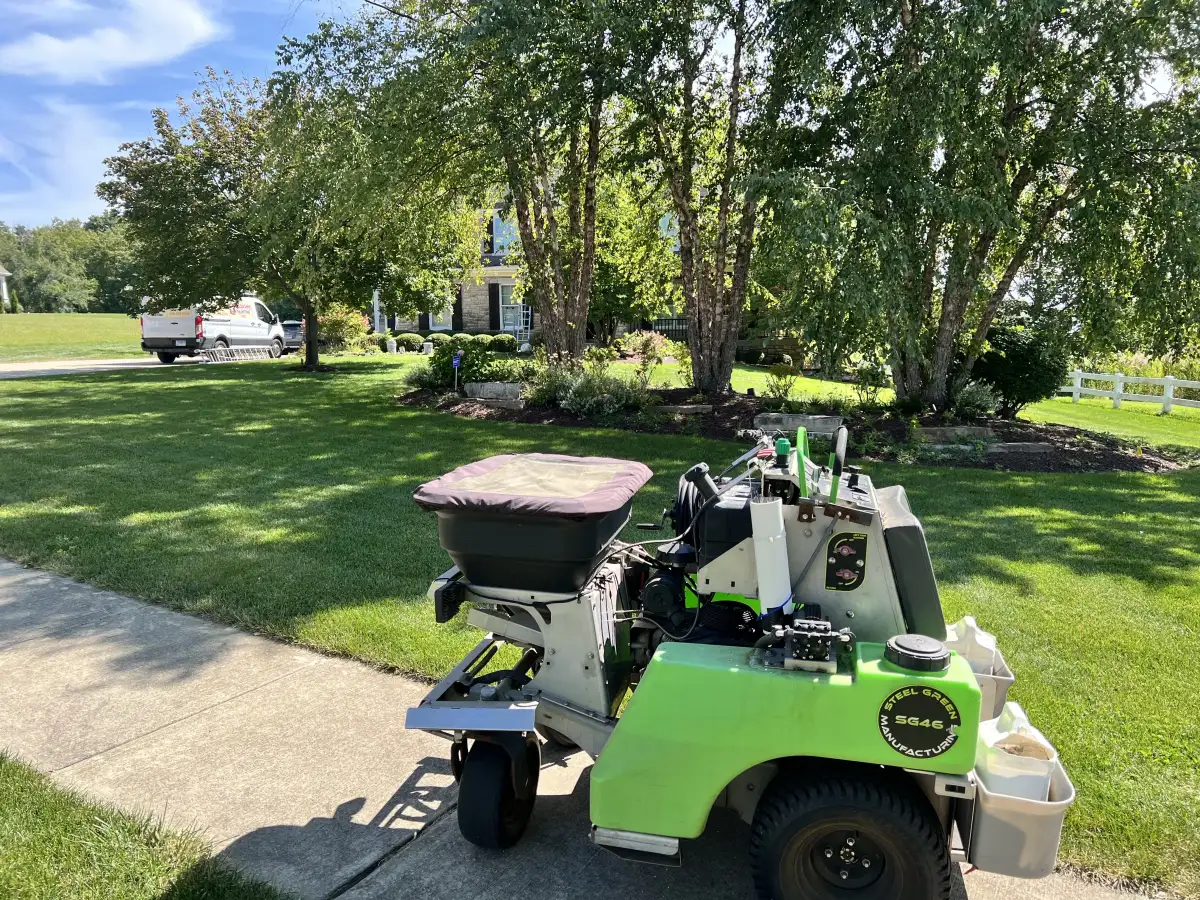
Professional turf management programs build grub prevention into the seasonal application schedule, so the product goes down at the right time alongside other treatments you are already receiving. There is no extra trip, no guessing about rates, and no risk of forgetting to water it in because the application is calibrated and documented by your technician.
For commercial properties and HOA communities, grub prevention is especially important. Large turf areas represent a significant investment, and widespread grub damage across common areas or entrances creates an immediate visual impact that affects property values and resident satisfaction. A preventive application in May costs a fraction of the renovation and overseeding bill that follows an untreated grub outbreak in September.
Protect Your Lawn Before Beetles Arrive
May and early June is the window. Once Japanese beetles start flying in late June, the preventive opportunity has passed and you are left hoping your lawn survives until fall renovation season.
Better Turf & Snow includes grub prevention as part of our comprehensive turf management programs for homeowners and commercial properties across the Fox Valley. Every program is customized to your property's specific conditions, soil type, and pest pressure history. Call Rick at (630) 528-2122 or request a free estimate online to get your grub prevention on the schedule before the May window closes.